When in Beijing—a city of around 22 million residents—3.45 billion trips by subway and bus are made annually, 29 lines crisscross the underground network, and eight million cars roam the streets, Berlin feels almost tranquil: a city of just under four million inhabitants, with ten subway lines and roughly 1.2 million motor vehicles.
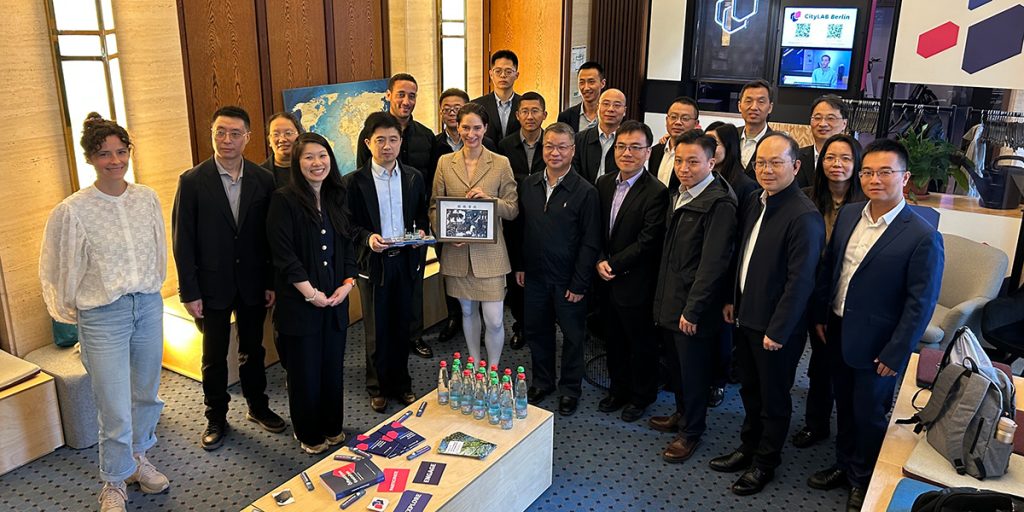
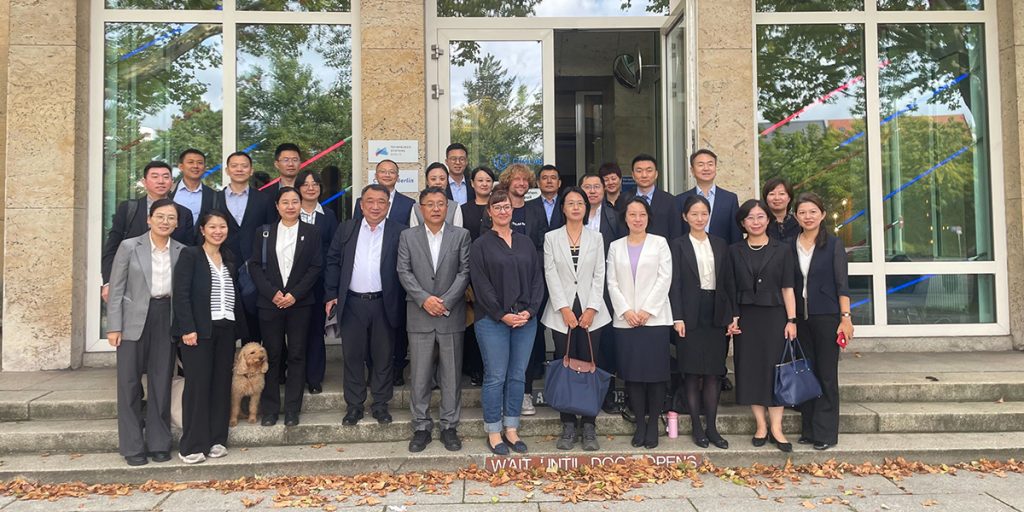
And yet, two separate delegations from the city administrations of Beijing and Shanghai recently came to CityLAB Berlin—not to talk about gigantism, but about something that preoccupies both cities equally: how to successfully combine technical innovations in smart cities and administrative modernization with citizen participation.
Citizen Participation — Thought of from the Start
In the Berlin Smart City and digital strategy “Gemeinsam Digital: Berlin” (GD:B), citizen participation plays a central role. The idea is clear: the city’s digitalization should align with the needs of its inhabitants—not the other way around. A strategy is only successful if it is carried out together with the people who live in the city.
Hence, the GD:B strategy was developed in a broadly based process together with five different target groups, including those who are often underrepresented in traditional participation formats.
In Beijing, too, citizen participation is understood as an essential element of a smart city strategy. Of course, the city is confronted with urban challenges on a much larger scale, but here, too, innovations should serve people—whether in mobility, health, or administration. Citizen service offices in neighborhoods (comparable to Berlin’s local quarter management) tend to the needs of people locally. Practical examples show how smart technologies are integrated directly into everyday life there: smartwatches for the elderly trigger an alarm if no movement is registered over an extended period. Smart elevators detect dangerous batteries in e‑bikes before they can cause fires in residential buildings. These offerings are met with high acceptance among citizens, as they noticeably ease everyday life.
Potentials and Challenges of Digital Services
Berlin too is experimenting with new ways to design digital services close to citizens. Around 400 online services are now available—from vehicle registration to residence registration. But usage is uneven: while about 80 % of car registrations are now processed digitally, only 10 % of residence registrations are handled online.
Here, the GD:B strategy also aims to have a positive effect via projects such as “DigitalZebra.” In DigitalZebra, citizens—especially older people—receive support in public libraries to access digital offerings of all kinds: beyond citizen services, this might include buying online tickets or sending emails. This shows that a smart city does not necessarily have to be digital.
Analog measures that focus on digital participation—such as these—also create opportunities for encounters and simultaneously help combat loneliness.
The “Kiezkassen” (neighborhood funds) project is another example of how digital tools can support citizen participation. Through the project, interest and active participation by citizens from various cultural, age, and social backgrounds in participation formats are to be strengthened. For this, an improved interplay of digital and analogue participation and interaction methods is needed, which is being tested in the use case “Kiezkassen.”
Thus, residents can use a prototypical platform—the so-called Kiezkassen app—to easily apply for funding for local projects such as park benches or street festivals. At the same time, the administration benefits because applications can be processed more efficiently.
Finally, this also touches on the big questions of the future: with the “Smart Water” project, Berlin is testing how the city can be designed to be more climate‑resilient. The goal is to support the vision of a “sponge city” through networked planning of green and blue infrastructure. This involves, for example, de‑sealing of surfaces and the active use of rainwater.
In addition, citizens should be able to receive warnings during heavy rainfall events—an example of how digitalization contributes directly to quality of life.

From Dealing with Data Silos to Bureaucracy
The question of the availability of open data, their integration and transparency arises not only in Berlin but also in megacities such as Shanghai. There, digital everyday life appears at first glance like a look into the future: with a single app, one can schedule doctor’s appointments, view pension contributions, pay fines, transfer electricity bills, or purchase subway tickets.
Yet as seamless as it looks for citizens, behind the scenes it remains complex. Only ten years ago, each administrative department ran its own data center, each district its own system.
These have since been centralized, but the big questions remain: how can data from dozens of departments be reliably brought together in a common server and centrally managed? Which data can be publicly shared? And how do you protect sensitive data without stifling innovation?
All of these questions often lead to protracted approval processes—a scenario all too familiar in Berlin. Here too, access to open administrative data is often a rocky road. A pragmatic approach can be seen in the ODIS project: the Open Data Information Office Berlin supports administrations in providing data in understandable and usable form, accompanies staff in the practical publication process, and develops digital applications with open data to make the value of open data visible for administration, urban planning, and citizens.
Conclusion — Learning Across Borders
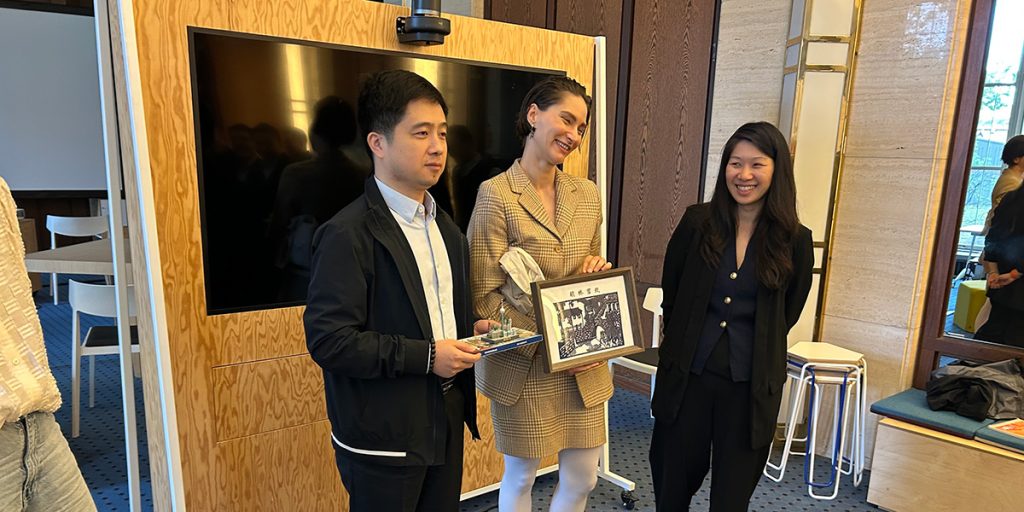
For us at CityLAB, the exchange with Beijing and Shanghai offered not only an exciting opportunity to gain insights into other urban structures and solutions, but also a valuable affirmation: despite different sizes and starting conditions, cities can learn a great deal from each other. All the more we are pleased that CityLAB is perceived as a place of international exchange—whether between administration and civil society or between cities worldwide. In the end, it becomes clear that it is less about the differences and more about a common goal: shaping livable, smart cities for people.
A special thanks goes to the Berlin Senate Chancellery and our colleagues from the Berlin Technology Foundation, who supported us in close cooperation in preparing and implementing the delegation visits.