Clinking coffee cups, bustling hustle and bustle and a quickly filled Red Hall: At the third annual conference of Gemeinsam Digital: Berlin (GD:B), the community once again came together in the heart of Berlin to discuss the implementation of the capital’s smart city and digital strategy.
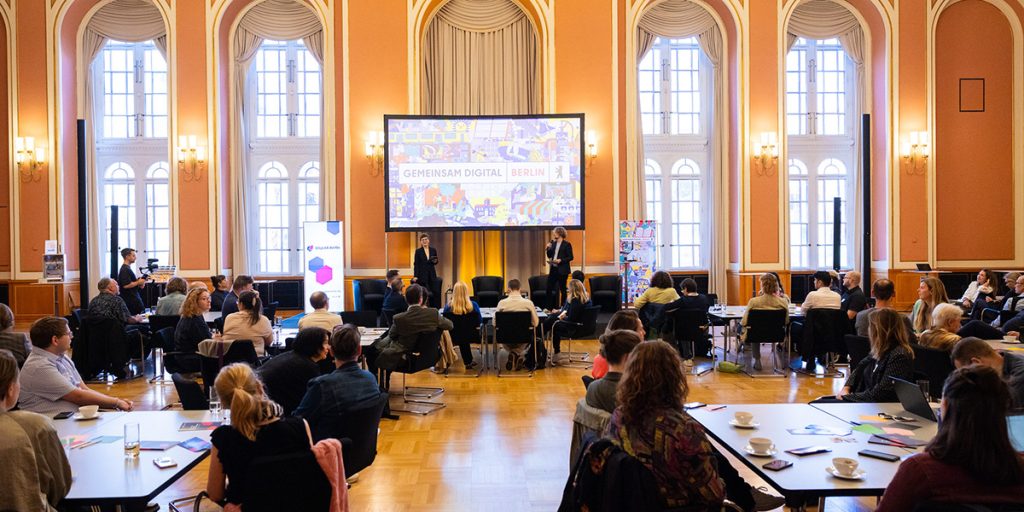
Specifically, the topic of consolidation was on the agenda. As with most innovative digital projects, the GD:B measures also raise the question of what structures are needed for such smart city projects to have a long-term impact in the city. A central matter that was discussed directly with decision-makers and experts in the supporting programme. Also present: the Governing Mayor of Berlin Kai Wegner and the State Secretary for Digitization and Administrative Modernization & Chief Digital Officer Berlin (CDO) Martina Klement. In this review, we report on the perspectives and insights that came together at this year’s GD:B annual conference.
The panel: four levels of decision-making and a surprising consensus
Complex questions are best approached through different perspectives. At the large panel of the event, four headquarters sat opposite each other: Adrian Gelep, Managing Director of the DigitalAgentur Brandenburg (Flächenland), CDO Martina Klement (state/city-state), Oliver Igel, District Mayor of Treptow-Köpenick (municipality) and Michael Huch, Project Manager of the Coordination and Transfer Office Model Projects Smart Cities as a representative of the federal government.
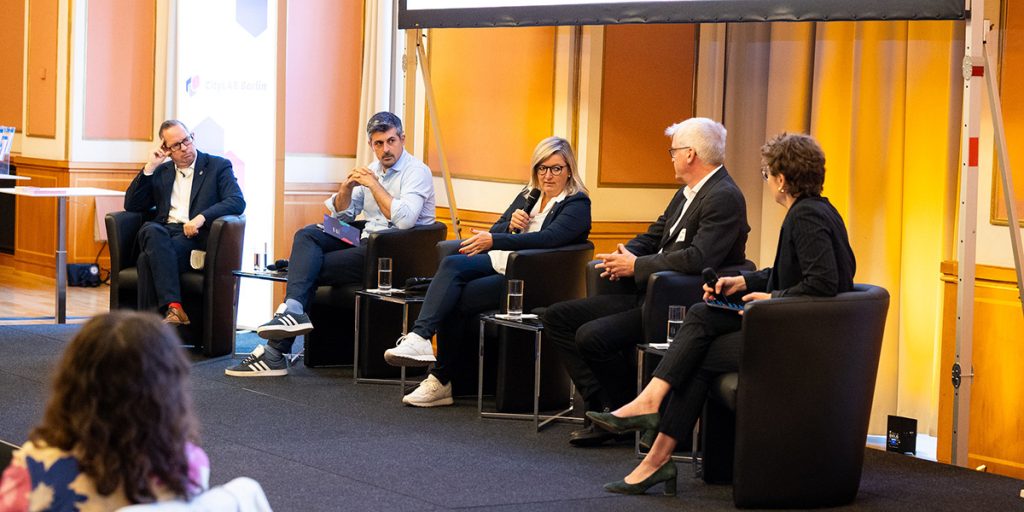
With regard to the core question of how pilot projects can be transferred into permanent structures, it quickly became clear that the continuation of projects is first and foremost not only a technical challenge, but also a political one.
This is mainly due to the federal conditions in Germany , but not only. It is also a question of attitude towards innovation processes in general. Adrian Gelep, for example, spoke out in favour of more boredom instead of ever new innovative ideas and thus for more courage to reuse existing solutions.
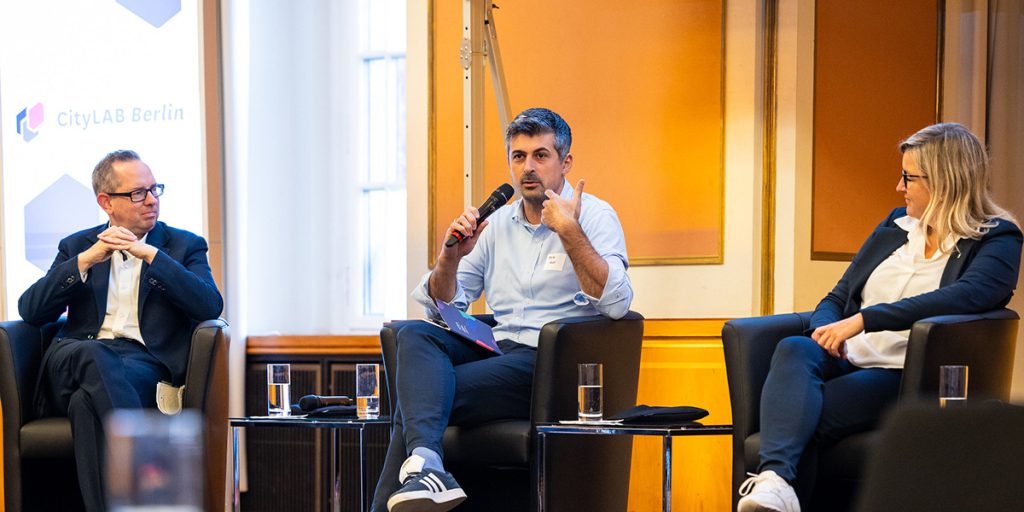
The individual panelists saw further problem areas in the often short-sighted funding logic, which does not include the continuation of projects, which means that the necessary support and resources are lacking. Ideas that had already proven to be useful in the practical phase thus fizzled out again. And due to the lack of common infrastructure and financing models, the all-important cooperation between the individual levels would fail to materialize.
But not only the different problems, but above all solutions were examined and five important levers were identified:
- Legal anchoring: Infrastructure (e.g. data platforms) must be regulated, financed and usable by law – not just voluntarily.
- Making added value visible: Digitization will only become permanent if its benefits are clearly communicated and can be experienced.
- Cooperation & scaling: Consolidation requires cooperation between levels and a “franchise mentality”: the same tools, the same processes, federally connectable.
- Financing & business models: Long-term stability requires stable financing models – from digital budgets to mixed financing of municipal infrastructure.
- Cultural change & honesty: Allow failure, end old projects, make the use of successful projects mandatory – and also visibly celebrate successes.
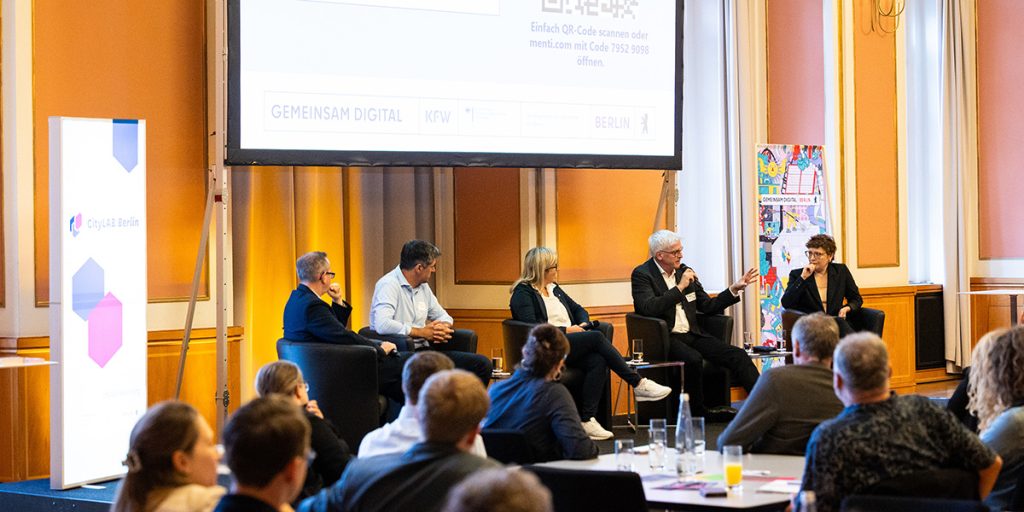
At the end of the panel, a surprising consensus even emerged: the need for more centralization. Oliver Igel would like to see binding specialist procedures, Martina Klement explains Berlin’s willingness to hand over competences to the federal government, Adrian Gelep relies on central standards and a “franchise mentality” and Michael Huch referred to common platforms and open source models. So the will to cooperate is there, perhaps even more than ever, especially when it comes to the topic of continuity.
If you want to have a long-term impact, you have to consolidate the exchange
The strategy Gemeinsam Digital: Berlin lives through the individual measures – and that’s why these and the individual teams behind them were the focus of the annual conference as usual. During a coffee break, there was room for the all-important exchange among each other and individual projects were presented. Among them was the Kiezbox 2.0 of the Technologiestiftung Berlin, a project that so shortly after the power outage in Treptow-Köpenick once again emphasized how relevant many smart city measures are already today.
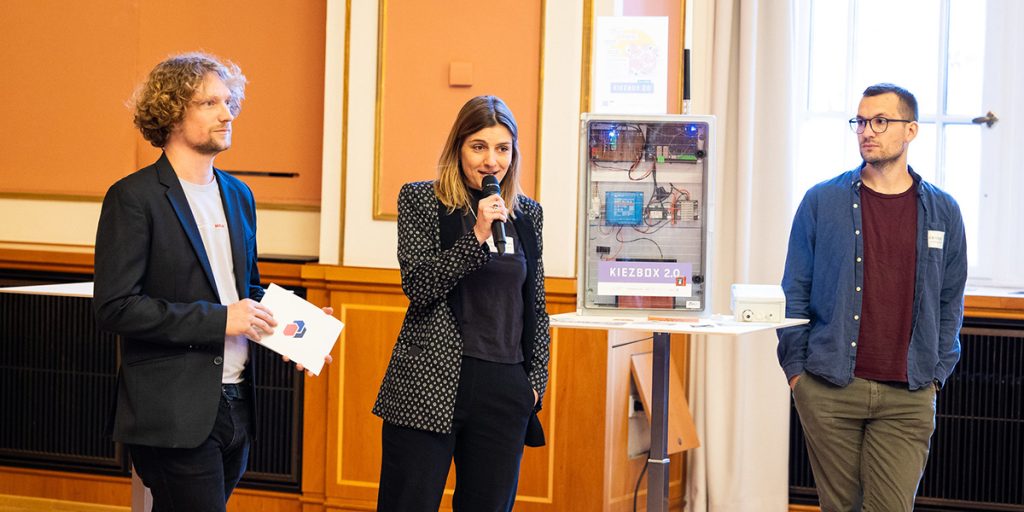
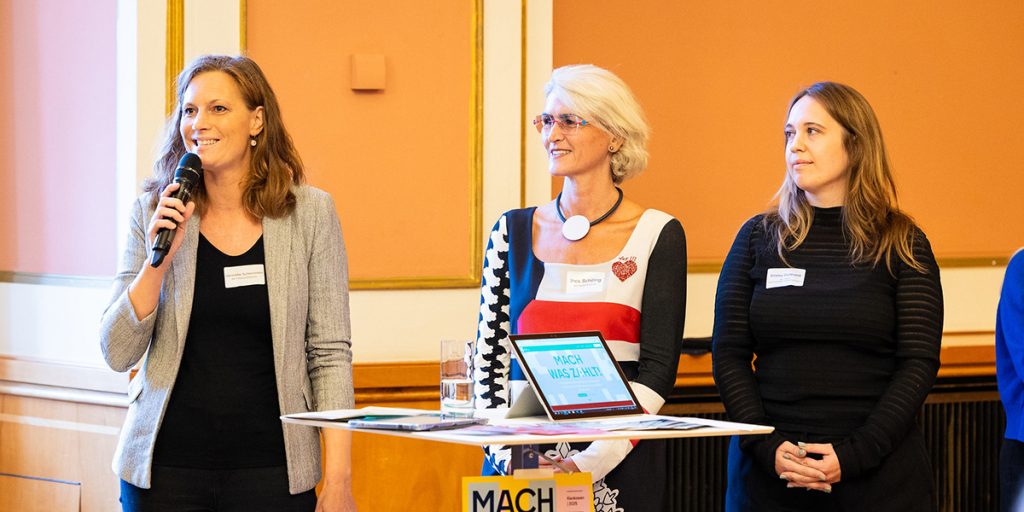
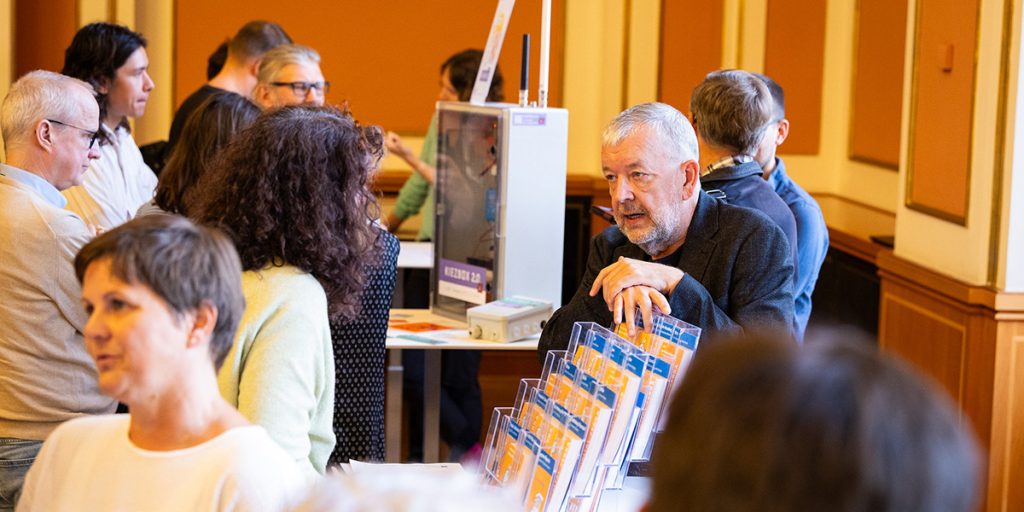
In addition, there was an opportunity to talk to each other about similar challenges and to give feedback directly from the audience as part of a fishbowl discussion.
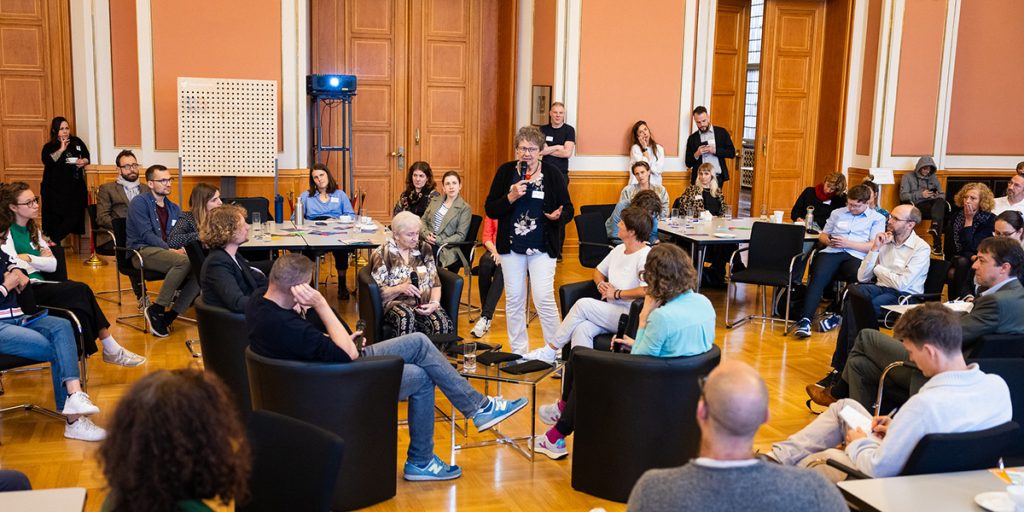
In an exchange between Dr. Stefan Heumann, Managing Director of Agora Digital Transformation; Melanie Thoma from the GD:B measure Seniorennetz Berlin of the AWO Landesverband Berlin, Lisa Junghans, GD:B measure Smart Water of the Kompetenzzentrum Wasser Berlin and Dr. Niklas Kossow from CityLAB Berlin, it became clear that despite the often uncertain and individual financing situation of projects, there is one central aspect that holds them together at GD:B: the common exchange.
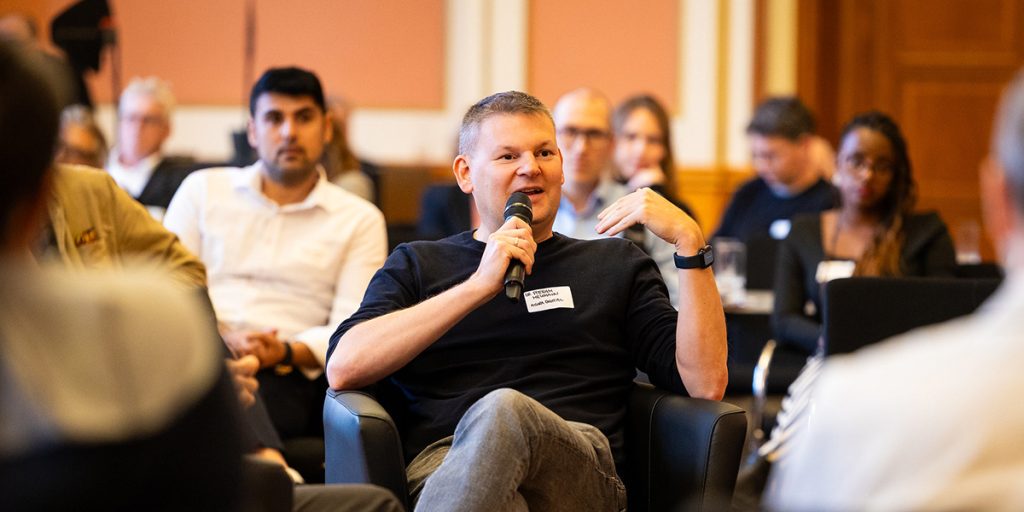
As casual as it sounds, the impact can be great – because the cross-project sharing of hurdles and progress is not a matter of course, it is an important building block for the continuation of these projects. Anticipating challenges at an early stage and exchanging ideas about solutions can thus help to think about sustainability concepts and the long-term impact of projects in good time.
“We want a functioning city”
This unity in terms of exchange and cooperation also ran through the other contributions of the day. CDO Berlin’s Martina Klement also emphasized that administrative digitization and the development of a smart city are mutually dependent for her. Although many positive things have already been initiated as part of the administrative reform, the usage figures for digital citizen services have fallen short of their potential. Here, one must advertise already existing digital offers more strongly. She also spoke out in favour of better data management in administrations.
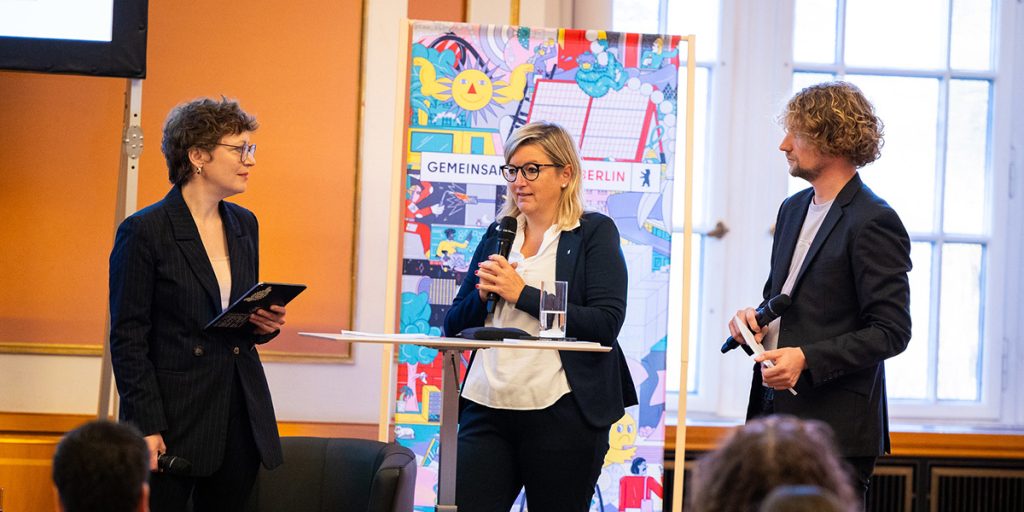
“For me, what makes a smart city is that, on the one hand, we have a digital administration that then goes hand in hand with all the activities we have in the city. For example, we already offer a lot of citizen services digitally, but we still have the challenge that we don’t yet have enough usage figures. That’s why I’m pleased that this goes hand in hand with many of the activities that we are developing as part of the Genmgemeinsam Digital: Berlin activities, above all the topics of administrative reform and the Berlin citizens’ offices. “
Martina Klement, State Secretary for Digitalisation and Administrative Modernisation & Chief Digital Officer Berlin
The Governing Mayor of Berlin, Kai Wegner, began by expressing his thanks to all those involved in the room and their commitment to the digital Berlin of tomorrow. A big step has already been taken in the digitization of administrative processes, and in view of the upcoming wave of retirements, the potential of artificial intelligence and the automation of processes must be used. In addition, it is important to work on legal requirements such as data protection.
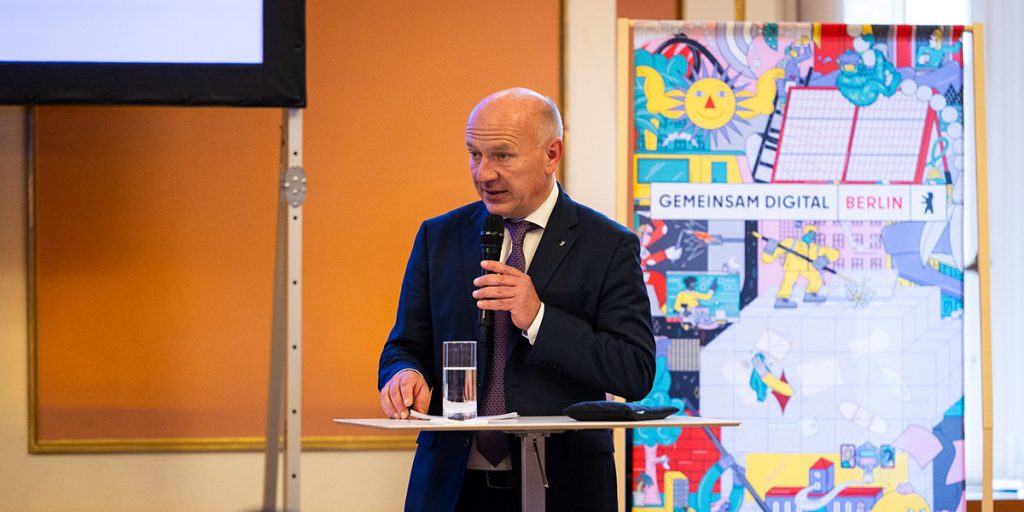
“On the one hand, the political will and on the other hand financial resources are always part of the continuity, and we have to look at how we can make these investments, because these are investments in the future.”
Kai Wegner, The Governing Mayor of Berlin
In his contribution to Berlin, the managing director of Agora Digital Transformation, Dr. Stefan Heumann, called for a clear commitment to real impact through continuity as well as to plan appropriate budget funds and directly demand the adoption of good ideas.
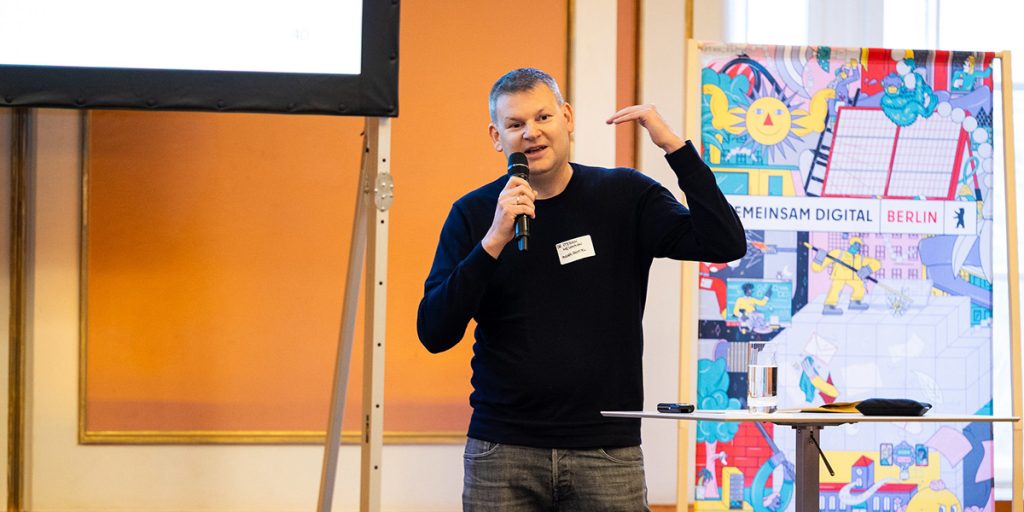
“In a digital strategy, it must be taken into account from the outset that continuity is not a sure-fire success, but that it takes time and resources to develop good approaches so that a prototype can also become a functioning product on a large scale.”
Dr. Stefan Heumann, Managing Director of Agora Digital Transformation
Karen Laßmann, Group Leader Smart City & Data Management at the Berlin Senate Chancellery and co-organizer of the GDB annual conference, was convinced that the event would once again make it visible that all the different activities ultimately want the same thing: to create a functioning city for the citizens who live in it.
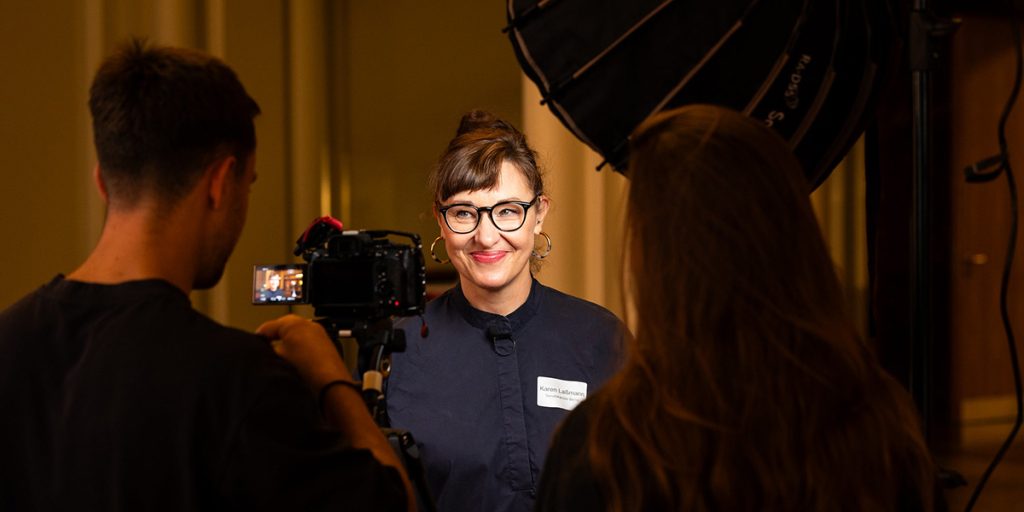
“We have developed a strategy with broad participatory participation with the urban society and we have been implementing it ever since. And we have been given new topics to deal with. In the end, good administrative modernization is the basis for a smart city, which is why I am pleased that we are setting up the Data Hub Berlin. If we succeed in this project, then we will have reached a huge milestone on the path to administrative digitization.”
Karen Laßmann, Group Head Smart City & Data Management at the Berlin Senate Chancellery
What remains?
Different perspectives, many interdependencies, common approaches to solutions and the consensus for more centralisation in digitalisation – this year’s GD:B conference revealed that the topic of consolidation has hit an important nerve. We at CityLAB are looking forward to continuing to accompany the GD:B action teams on their way to implementation and to further promoting the so important exchange. This exchange is also very important for us, because the challenge of making digital products permanent naturally also affects us. The exchange with the GD:B community also helps us to move forward.
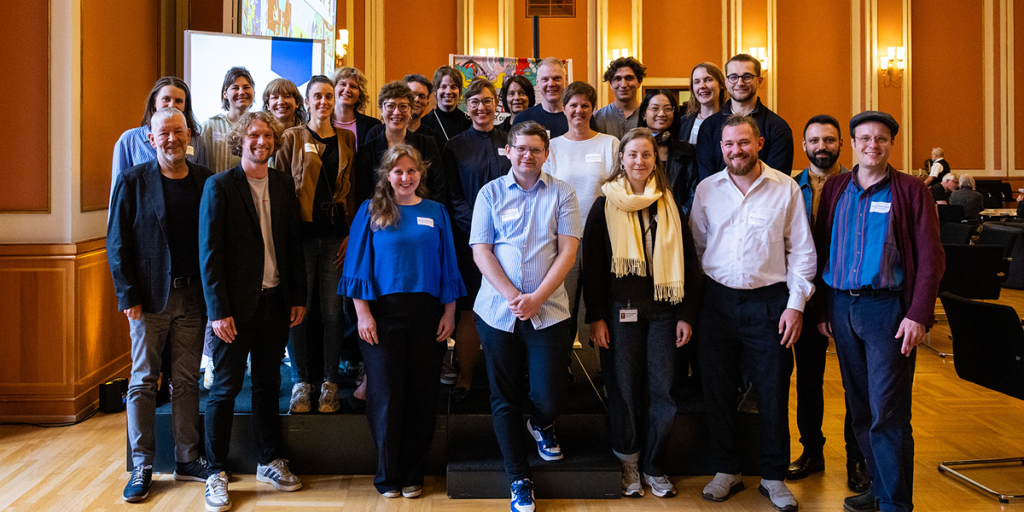
More photos of the GD:B annual conference can be found on Flickr.