The “cityscape” has been hotly debated in recent weeks. But what actually bothers us about the cityscape? In Berlin, the list is long … from dumped sofas and bathtubs to flying chip bags and scorching concrete deserts — it’s all there. And what does any of this have to do with placemaking? In German, “placemaking” is translated as “Stadtmachen,” and that’s exactly what it means: making the city together. But how? And why?
Placemaking at the Kiezlabor
“We shape our buildings; thereafter they shape us.” (Winston Churchill). Put simply: when we stand at a loud, stressful intersection, we quickly become stressed ourselves.
Placemaking is a creative approach to making urban planning and design participatory and experimental – to break out of entrenched structures and to try new ideas easily and quickly. But what does that look like in practice? At the Kiezlabor, we work with the placemaking approach in various ways. Here are two examples from our locations this year.
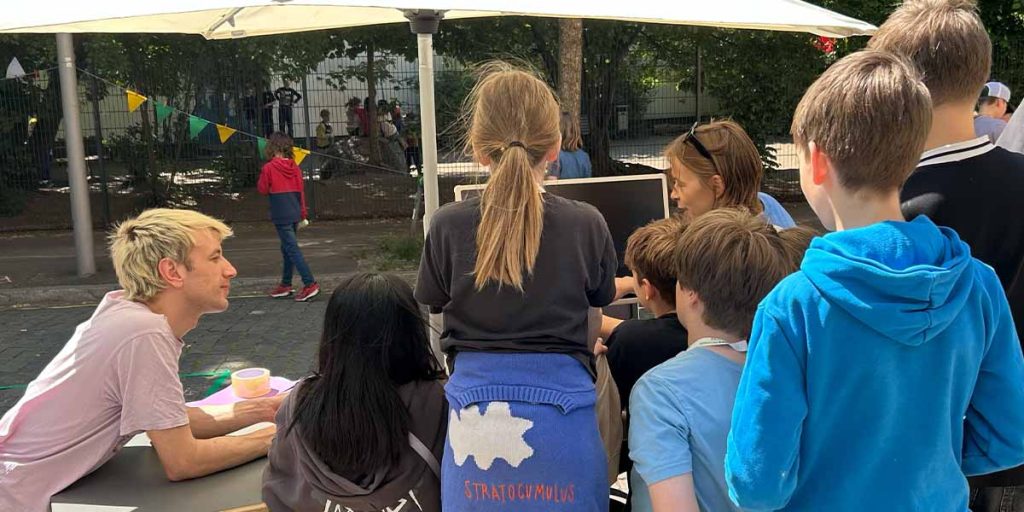
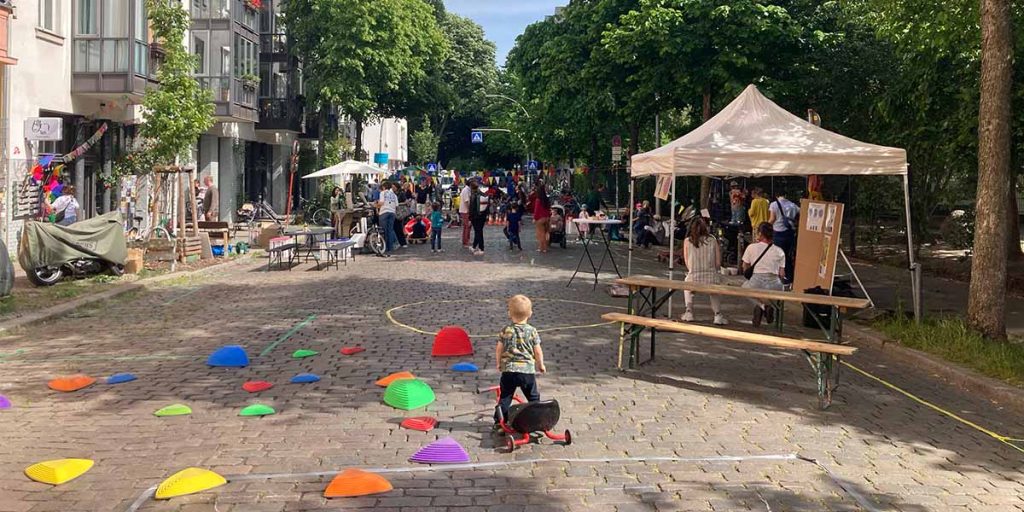
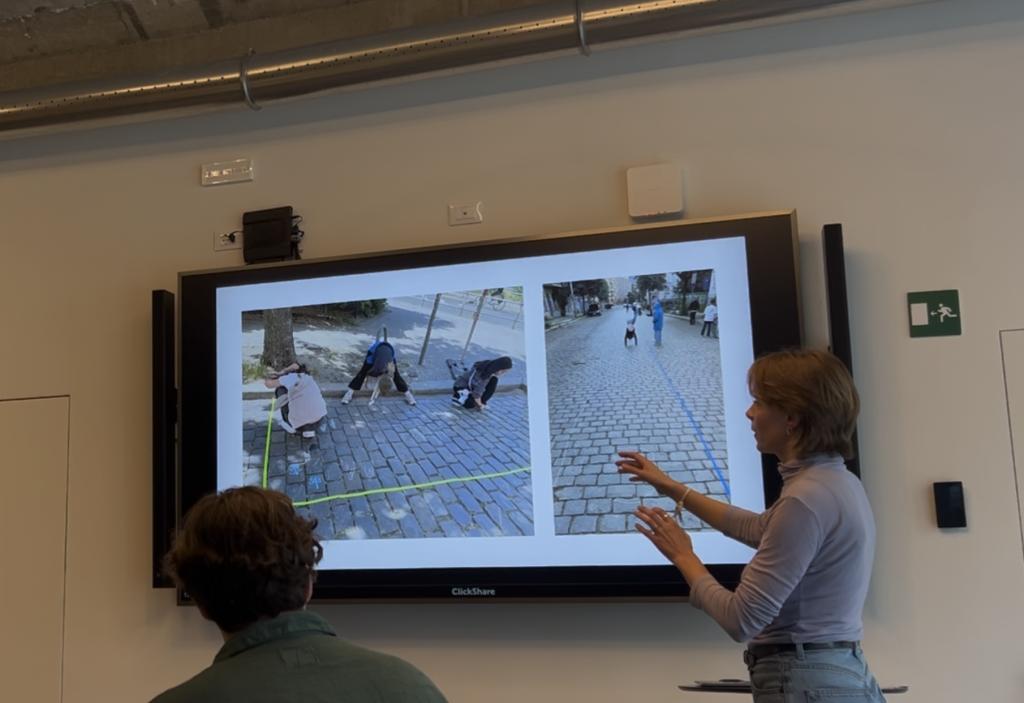
- City visions with AI and chalk: With our cargo bike in Friedrichshain, we once again offered a “City Visions” workshop this year. Together with school classes, we explored future visions for the street in front of the school that is due to be redesigned. Partly digital, partly analog. First, we generated images of the redesigned street using AI to see what it might look like with, for example, more greenery or a basketball court. And above all, to discuss why these changes might be desired and how they could work in practice – or to identify potential obstacles right away. In the second step, the children brought their ideas directly onto the street – literally. Using chalk and tape, they marked the area where a green strip should be, and then enthusiastically practiced riding bikes over it.
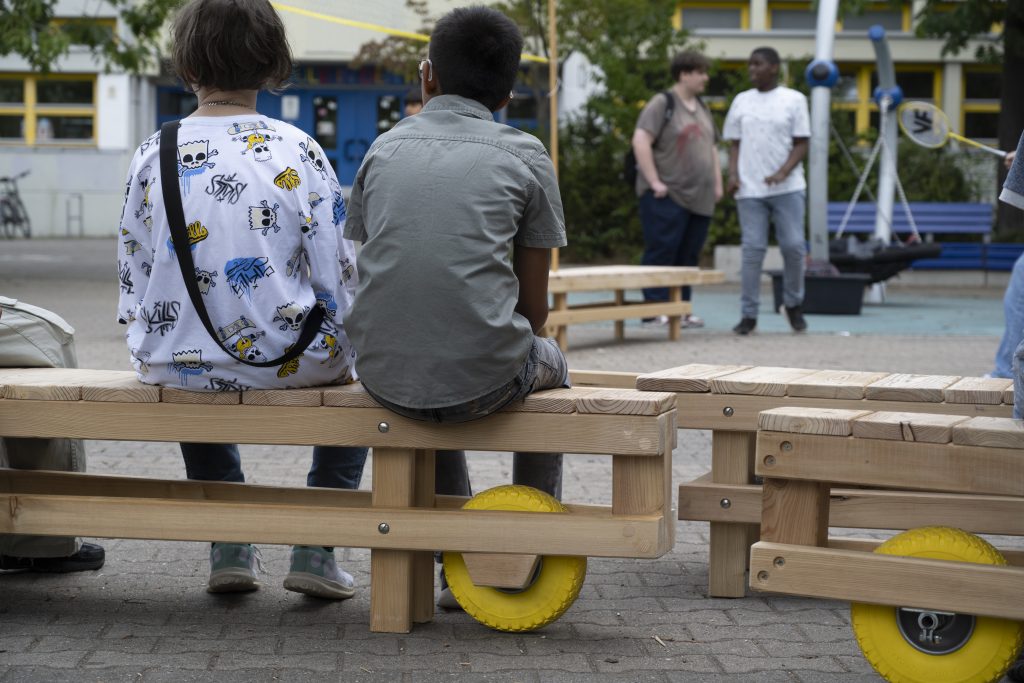
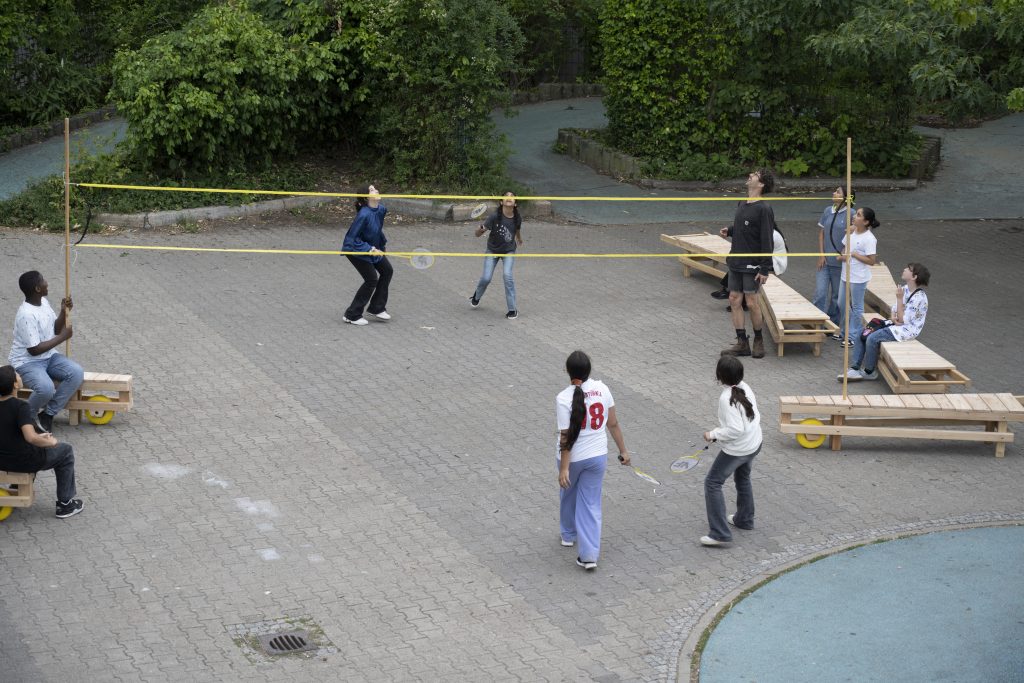
- Building street furniture together: At Poppele-Platz in Reinickendorf, we built street furniture on-site together with local residents and the design studio OUTRA. This not only allows people to immediately test what it feels like to suddenly have a bench or a raised bed in that space, but it also fosters a stronger sense of responsibility for the object created.
This way, people can try out and test their ideas directly – for example, where exactly a bench should be placed, or what it feels like to ride a bike on a street that is normally full of traffic. Once people can experience and see what change might look like, it suddenly becomes much more tangible – and therefore more achievable.
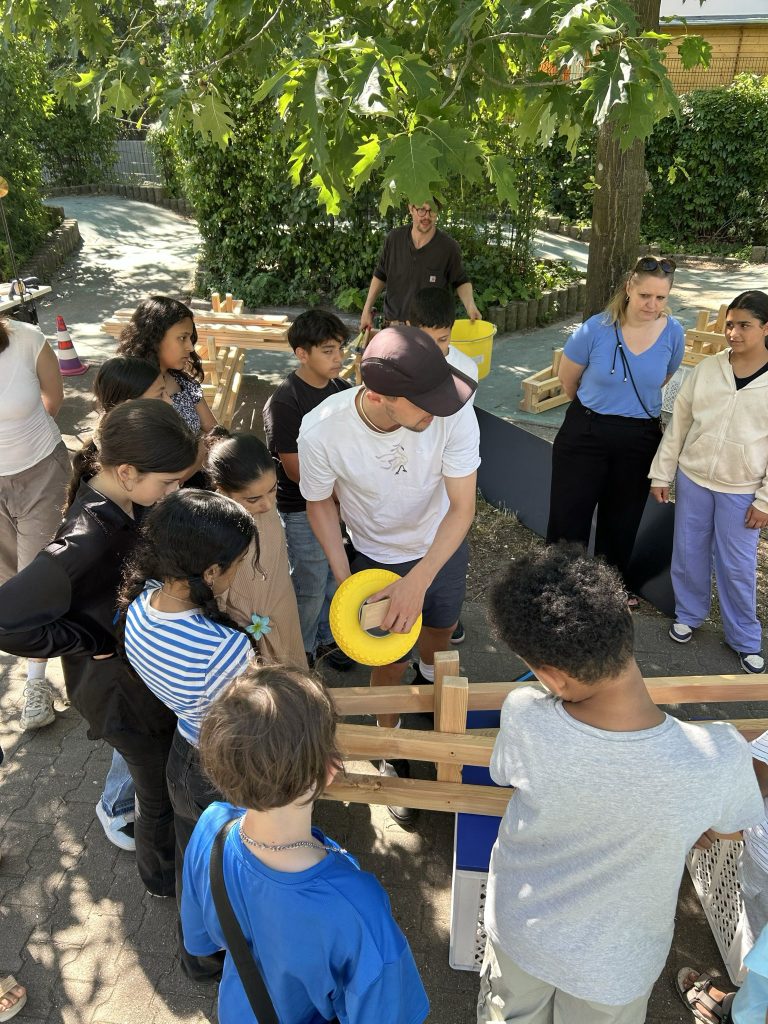
Building Street Furniture Together
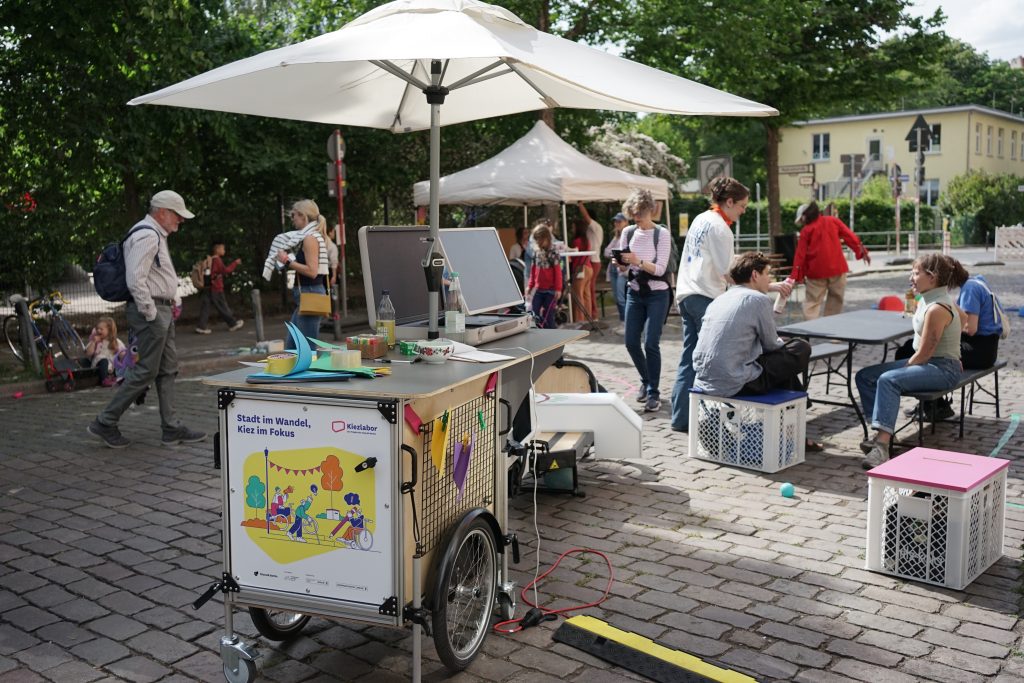
The three dimensions of placemaking required for the examples mentioned are: hardware, software, and orgware. That means not only the bench with an integrated raised bed (hardware), but also the school club that waters it (software), and the neighborhood management, to which we hand over not only the furniture but also the participation results for long-term impact (orgware). In other words: physical, social, and cross-network structures.
We tested all of these things throughout the season and, in doing so, traveled through several neighborhoods once again. And to send the Kiezlabor into the winter break full of inspiration, we attended the Placemaking Week Europe in Italy at the end of September.
Placemaking Week Europe: Learning from Europe for Berlin
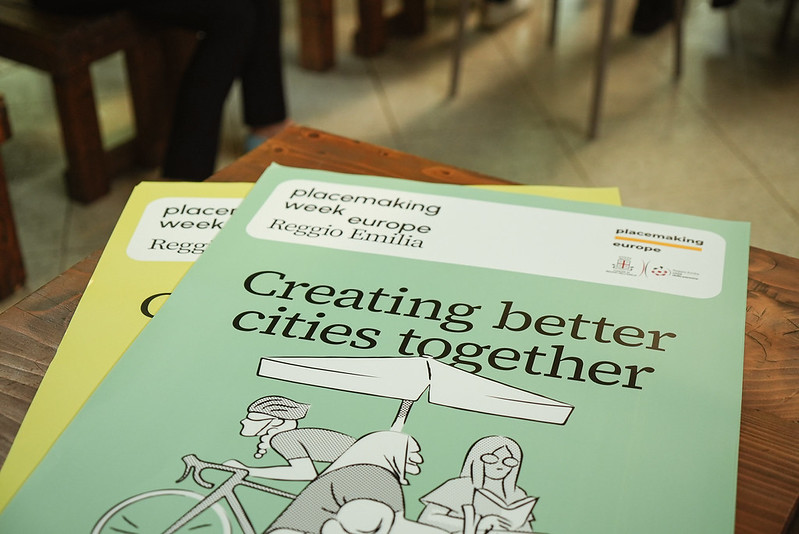
Many of the themes that shaped our Kiezlabor season – diversity and encounter, vacant spaces, climate adaptation, and mobility – were also reflected at the Placemaking Week Europe (PWE). But the PWE went even deeper: alongside familiar challenges such as soil sealing, shading, or questions about future parking usage, it made local problems visible that are often overlooked in everyday urban life.
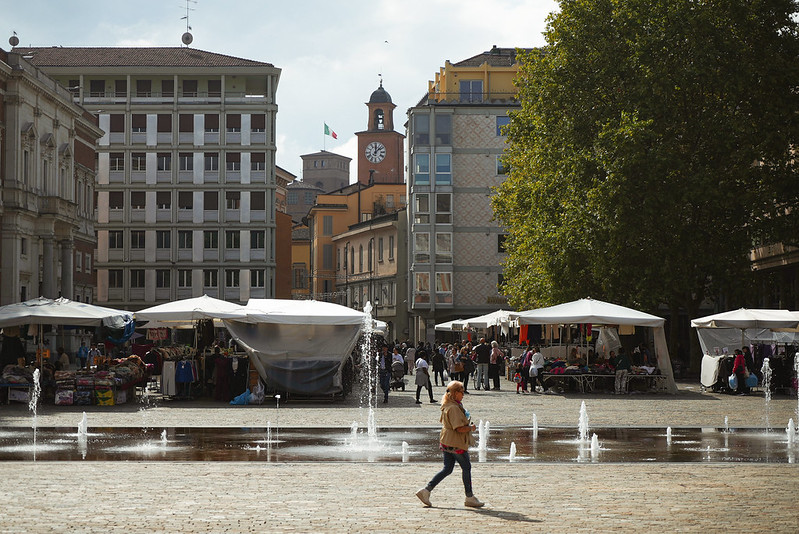
Reggio Emilia, this year’s host city, is a good example. Despite its beautiful historic city center, parts of the city seem frozen in time: many apartments are empty, institutions from cinemas to workshops are closing, asphalted squares lack greenery, and fewer young people are present in the urban landscape. These developments are not isolated cases – and that’s exactly why hundreds of people from cities and countries across Europe gather at the PWE each year: to understand the causes and share approaches to counter such trends. Whether rising rents, sealing, or a lack of social infrastructure – the issues are similar everywhere, but the solutions are diverse.
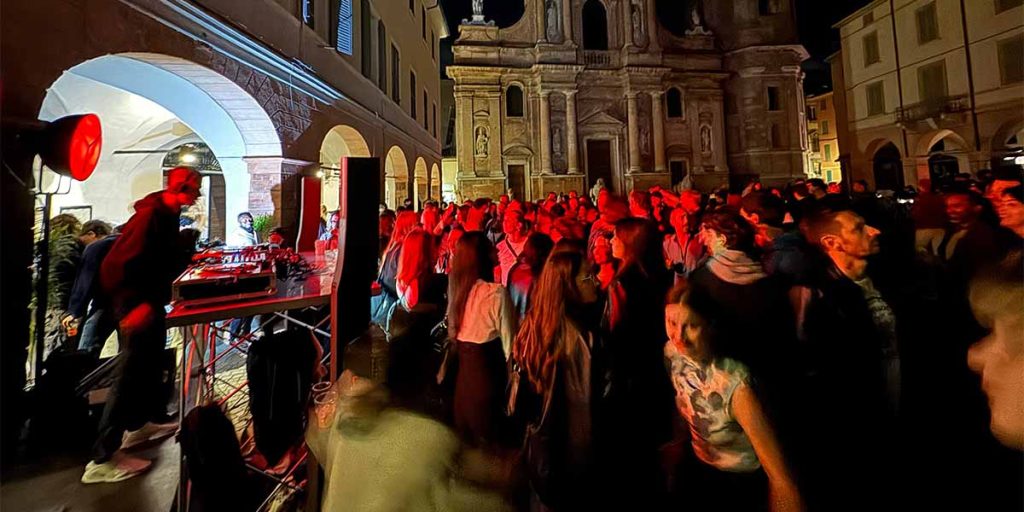
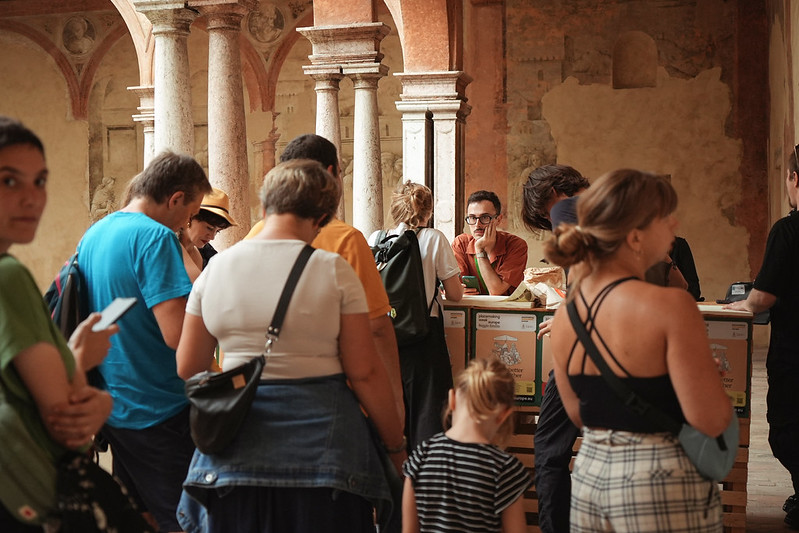
And the PWE is far from an ordinary conference: it does not take place in a large exhibition hall, but in the Parco Innovazione and throughout the city itself. After all, it’s about the city. At the end of the conference, people even danced on one of the “piazze.” Italians are just a bit more relaxed – and the bass was allowed to thump even after 10 p.m.
Highlight Sessions:
Design for Urban Change Toolkit
One of the sessions took place in a small backyard — an almost incidental location that perfectly suited its topic. The starting point was an abandoned town in Spain, where the last school had closed and the community was struggling with outmigration, especially among young people. Using the Design for Urban Change Toolkit, we explored methods to make such developments visible and to plan and discuss possible interventions.
Panel: Intersections: Placemaking across disciplines and sectors
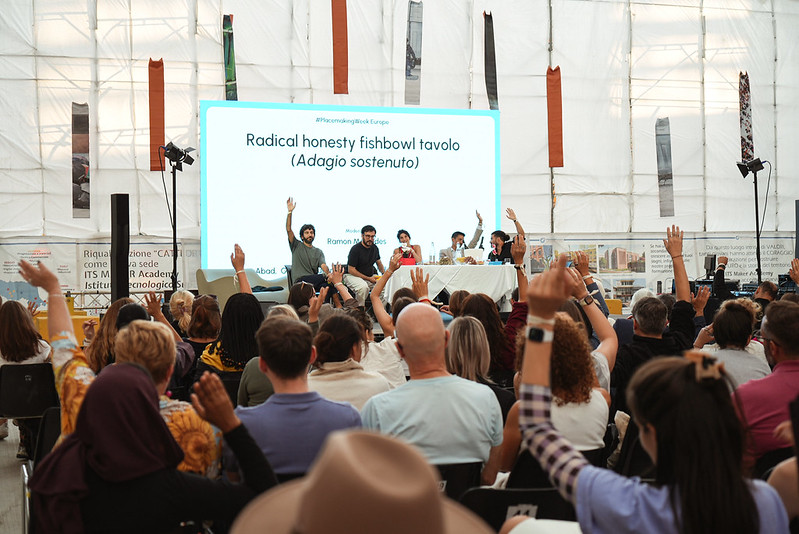
It quickly became clear that the situation described was not an isolated case, but one that affects many regions across Europe. In a panel and the Radical Honesty Fishbowl, the political and structural framework was discussed — openly, directly, and without sugarcoating. Topics included, for example, the effects of economic transformation in cities: from formerly industrially specialized places to a service-oriented society, where many municipalities must redefine their roles. While some cities are growing rapidly, others struggle with outmigration — and both developments exacerbate similar problems: loneliness and social fractures. In addition to the economic perspective, the psychological dimension was also discussed: “Some people might not necessarily need therapy, what they need is fair policies.” (Ronke Oluwadare)
Local Challenge: Nature-based and climate-proof rethinking of Piazza della Vittoria
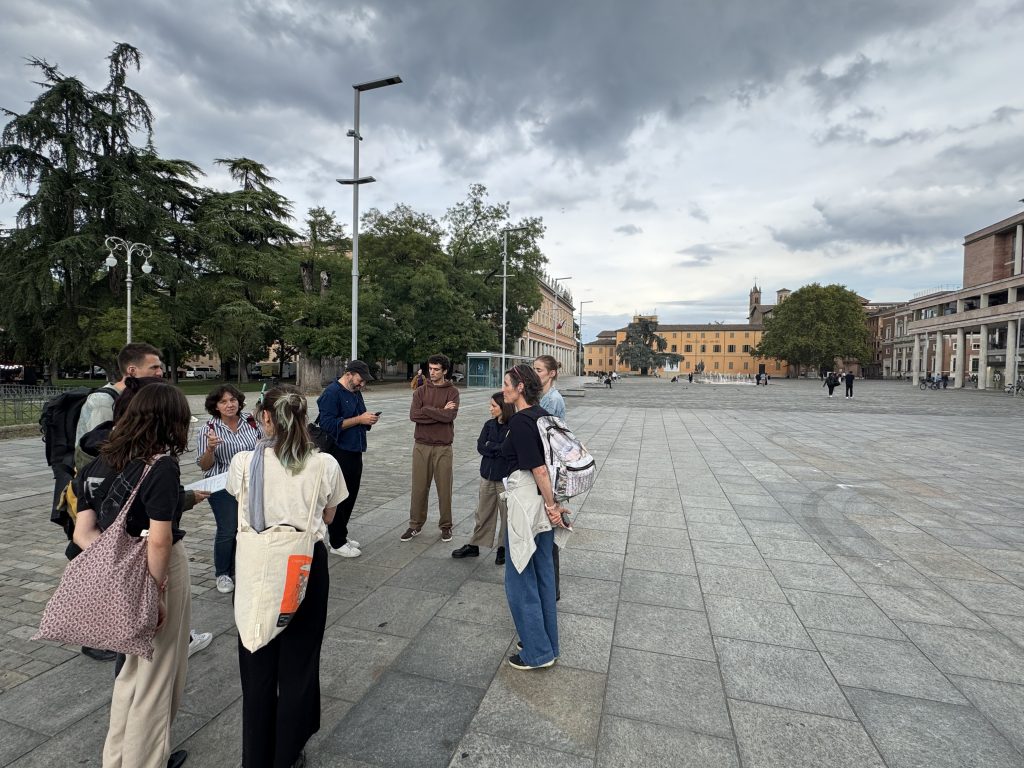
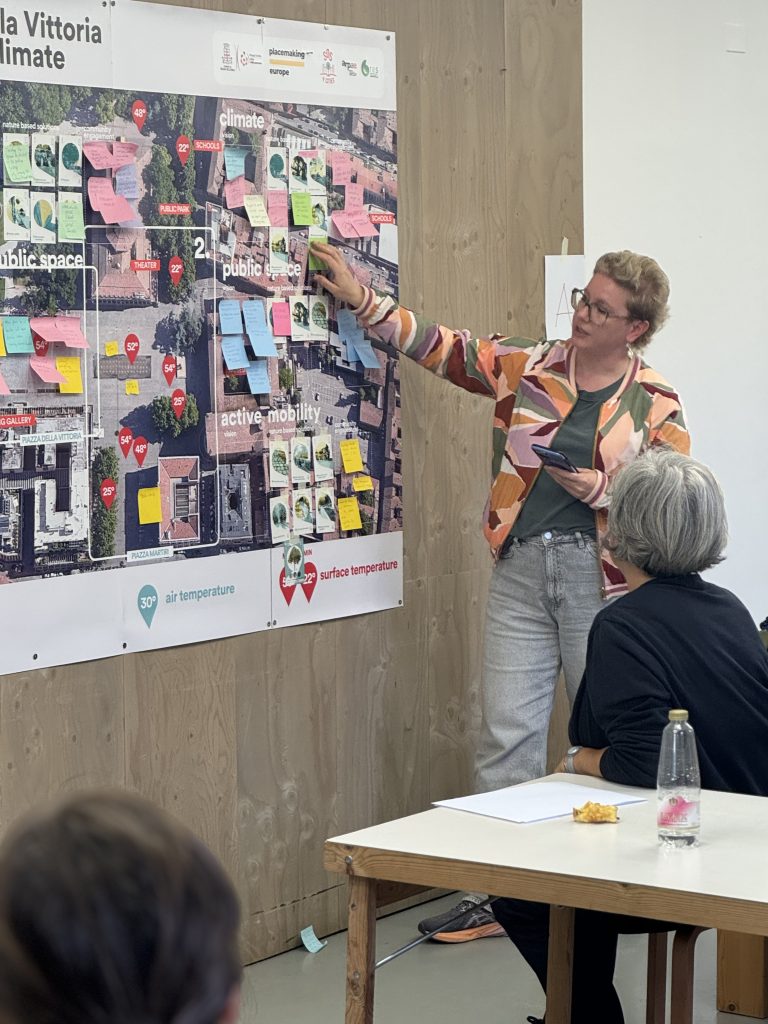
Another hotly debated topic was climate change: In one of several Local Challenges, we focused on climate adaptation strategies and nature-based solutions. Following inspiring input from Gehl and Inclusive City, our group, consisting of local residents, administration representatives, and urban planners, analyzed the square and developed concrete proposals for the city. For this, we used SOS4CITIES as our methodological approach. During the analysis, we quickly realized that what was particularly missing were places for people to gather – accessible to everyone, without barriers. That is, without paywalls, without heat stress, and without expectations.
Placemaking – Somewhere Between Asking and Daring
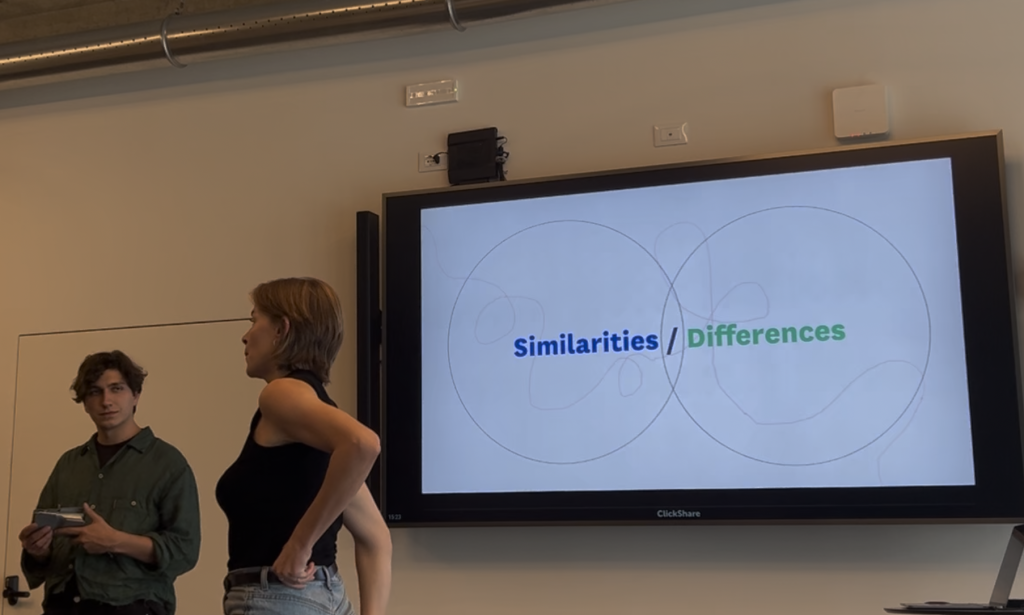
A highlight, alongside ice cream and Parmesan, was, of course, that we were able to create our own discussion session at the PWE. In this session, we engaged with the concepts of “top-down” and “bottom-up” together with CityPelotonfrom Tel Aviv: Two tactics walk into one piazza.
CityPeloton is commissioned by the city to implement interventions and then observes how people respond to them (top-down). The Kiezlabor, on the other hand, goes to places to experiment with ideas together with residents, in order to jointly initiate long-term change (bottom-up). Both approaches have their advantages and disadvantages, but they share one thing above all: overcoming obstacles playfully and bringing people together.
Inspired? Become part of it now
And what remains? Many new contacts, a full stomach, and a new initiative: Placemaking Germany was officially founded. Are you also an active initiative or city in Germany? Then get in touch here.
Do you have ideas or concerns about changing the urban landscape? The Kiezlabor is looking for new locations for 2026 through our Open Call. The deadline is November 30, 2026. We look forward to hearing from you. Ciao!